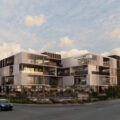
Mixed-Use: A Trend Reshaping the CBD
Cape Town’s impressive redevelopment over the past 15 years has seen a wave of mixed-use developments rise up across the city. This next generation of Cape Town urban renewal design, combining the best of residential, commercial, and retail spaces in one elegant package, is redefining how people live and work in the Mother City.
In this article, we take a closer look at some of the most striking examples of this trend and explore why these all-in-one spaces are attracting discerning tenants from across the peninsula.
Mixed-Use and no Mixed Feelings
While mixed-use buildings are not new to Cape Town, the scale and sophistication of recent developments herald a more strategic, future-focused approach to city planning.
Following the pandemic and a global trend toward remote and hybrid work, the demand for well-located, flexible spaces has surged with developers heeding the call.
- The Cape Town Central City Improvement District (CCID) reported that by the end of 2023, private investment into the CBD had more than doubled year-on-year, topping R7.2 billion.
- Notably, seven of the thirty active developments in the CBD were mixed-use in nature. This is a strong signal that investors see this model as a safe, diversified bet.
From sleek new glass towers and meticulous heritage renovations, to lifestyle-led precincts that include gyms, co-working lounges, rooftop pools, wellness studios, and restaurants, mixed-use developments are redefining life in the CBD for the better.
One Building, Many Dimensions
Today, the CBD is home to numerous mixed-use developments that exemplify the convenience and desirability of this building type.
The Rubik, a 27-storey architectural standout on the corner of Loop and Riebeek Streets, is a perfect example.
- With residential units starting on the 18th floor and commercial and retail space on the lower levels, the building neatly captures the work-live-play ethos driving interest in mixed-use precincts.
- It’s also pet-friendly: a detail that speaks volumes about how developers are rethinking city living in a more holistic, human-centred way.
A few blocks away, One Thibault has transformed what was once a lacklustre office tower into a vibrant mixed-use address.
- Following a R500 million renovation, the tower now features hotel-style apartments, co-working areas, and restaurants.
- One Thibault is a model of adaptive reuse, injecting life into previously underperforming commercial spaces and equipping them for the 21st century.
The Barracks (a boutique development on the corner of Bree and Shortmarket Streets) showcases how heritage buildings can be revitalised for modern needs.
Here, developers have retained the historical façade while adding stylish apartments, wellness offerings, and flexible office space in a compact, walkable format.
Big Vision, Bigger Precincts
Beyond individual buildings, a number of large-scale precincts are beginning to change the cityscape in fundamental ways.
Harbour Arch, for example, is one of the most ambitious developments in Cape Town’s modern history.
- Spearheaded by the Amdec Group, the R16 billion project will comprise six towers across 5.8 hectares, including residential units, office floors, hotels, shops, and public plazas.
- The aim is to create a true ‘15-minute city’ where everything you need is within walking distance or a quick MyCiti bus ride.
A similar vision underpins Canal Walk’s surrounding precinct in Century City, where corporate offices, luxury apartments, shopping, schools, and nature reserves co-exist in a tightly integrated urban ecosystem.
The V&A Waterfront continues to evolve in this direction too, with a steady rollout of residential and cultural components to complement its world-class commercial offering.
These precincts represent a shift in how space is being planned and used. It’s no longer just about ROI on square meterage, but about creating entire environments where people want to spend their time.
What’s Driving the Demand for Mixed Use?
The surge in demand for mixed-use developments can be explained by the convergence of several key trends.
- Flexible work has created a new type of urban consumer: someone who wants to live close to lifestyle amenities, but doesn’t necessarily need to commute daily to a traditional office park.
- Safety and convenience are also major factors. Cape Town’s inner city has benefitted from years of targeted investment in urban management and public safety.
- CCID patrols, clean-up teams, and the rollout of fibre and public Wi-Fi have all made central living more attractive to both locals and international residents.
From a financial perspective, there’s also the issue of diversification.
Mixed-use developments offer property investors a hedge against uncertainty. If the residential market softens, retail or office components might still perform, and vice versa.
That’s part of why private equity funds and global institutional investors have been so bullish on this building type, especially in a volatile economic climate.
A Greener Way to Build The Future
Another significant driver of the mixed-use trend is sustainability.
With space at a premium and energy costs on the rise, developers are building smarter and not just bigger.
Many of Cape Town’s flagship mixed-use projects are green-certified, incorporating energy-efficient systems, smart water use, and even vertical gardens.
- The Fynbos on Bree Street is a biophilic high-rise development that integrates over 1 200 species of indigenous plants into its façade and communal areas.
- With solar panels, greywater recycling, and cross-ventilation built into the design, it’s a blueprint for what future city living could look like.
On the commercial side, green credentials are becoming more than just a nice-to-have.
Many multinational tenants now insist on operating out of sustainable buildings, meaning that ESG compliance can directly impact leasing viability.
Adapting Older Buildings to Beat the Office Glut
With vacancy rates in the traditional office sector still stubbornly high, more developers are also looking at conversions as a route into the mixed-use space.
Rather than demolish, they’re retrofitting existing structures to meet new needs. This is exactly what happened at Foreshore Place (formerly the ABSA building) which has been reimagined as a mix of modern apartments and commercial units.
- The economics of this development make good economic sense: older office buildings often have good bones, central locations, and underutilised zoning rights.
- With smart design and capital injection, they can be turned into profitable, lifestyle-rich properties.
This strategy also serves a broader urban purpose: breathing life back into quiet, often neglected corners of the city while reducing the environmental cost of new construction.
The Perks of Mixed-Use Developments
One of the clearest advantages of mixed-use developments over traditional separate-use buildings is the way they condense urban life into something more walkable, convenient, and efficient.
Instead of commuting between home, office, gym, and supermarket, often in traffic, you can do it all in one place.
The financial gains of mixed use buildings are just as compelling.
- Having residential, commercial, and retail components under one roof spreads the developer’s risk across multiple income streams, allowing one segment to carry the load if another underperforms.
- For investors, that diversification translates into greater stability and higher occupancy rates. From a yield perspective, it is an efficient use of land, especially in high-demand areas like the CBD or the Foreshore.
Considering the ability to adapt spaces over time, converting unused office floors into micro-apartments or co-working studios, you have a model that not only reflects how people want to live today but one that is built to stay profitable tomorrow.
A Few Challenges Lie Ahead
Like any property segment, mixed-use development is not without its challenges. The complexity of integrating multiple uses, each with their own design, compliance, and operational requirements, can slow down planning and inflate construction costs.
Conversions, in particular, can run into unforeseen structural issues or heritage constraints.
Infrastructure is another pressure point. Many of Cape Town’s older districts have ageing water, sewerage, and electrical systems and are not always ideal for high-density, mixed-use schemes.
The city’s transport grid continues to improve, easing traffic congestion, particularly during peak tourist seasons.
Find Your Ideal Mixed-Use Office Space Today
Despite a few basic challenges, the trajectory is clear: mixed-use developments are here to stay, and likely to define Cape Town’s growth for decades to come.
With more than R39 billion committed to infrastructure upgrades over the next three years, the city is laying the groundwork for higher-density, better-connected urban life. Now is the ideal time to claim your place in the future way of living and working in the Mother City.
To explore our portfolio of premier office space – including several prime Cape Town mixed-use developments, contact our team of area specialists today.