Designing for Wellbeing: How Cutting-Edge Offices Reduce Burnout Before It Starts
Workers around the world are fighting a battle against burnout, and it’s about much more than exhaustion or long hours.
But in reality, burnout is rarely that simple. It’s a complex mix of physical fatigue, cognitive strain, emotional depletion, and social disengagement. Increasingly, research shows that the workplace environment itself can either exacerbate or mitigate these effects.
In Cape Town’s commercial property market, this is particularly relevant as hybrid work reshapes tenant expectations and office design.
As hybrid and flexible work models take root, commercial landlords and developers face a new reality. The most successful properties today are those that energise, support, and restore employees, contributing directly to productivity and wellbeing.
Here’s a deeper look at the burnout epidemic and how innovative office design can help to reverse it.
Are hybrid work models contributing to burnout?
Many companies have returned to the office already, but for those that still have a flexible attendance policy, one of the most profound challenges of hybrid work is the dilution of workplace culture.
According to recent research by Steelcase, office culture is not perceived by workers as just a set of values on paper. As a lived concept, it is experienced through every interaction, ritual, and physical space within an office.
- When employees are scattered across home offices, coworking spaces, or satellite hubs, the shared experiences that reinforce identity, belonging, and collaboration are weakened.
- Informal exchanges by the coffee machine, spontaneous brainstorming sessions, and the subtle cues of social cohesion no longer occur naturally, which can lead to employees feeling disconnected, undervalued, or less engaged.
What appears at first to be a social issue directly impacts productivity, creativity, and retention. In response, physical design can actively support a company’s cultural continuity even in hybrid models.
Spaces that are intentionally designed for collaboration, storytelling, and community rituals can become anchors for culture, ensuring that employees retain a sense of belonging and purpose.
This approach encourages organisations to redefine their offices not just as work locations, but as experiential hubs where culture is lived and reinforced, helping prevent disengagement and burnout while fostering a resilient, connected workforce.
Burnout: Why office design matters
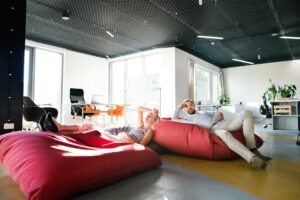 If you’ve ever experienced severe burnout, you’ll know that it goes way beyond being tired. Its effects include a loss of motivation, reduced concentration, and emotional disengagement.
Factors like persistent noise, glare, poor furniture ergonomics, and lack of privacy can compound these effects. Thoughtfully designed workplaces can reduce cognitive fatigue, encourage collaboration, and enhance overall satisfaction.
The rise of hybrid work has also weakened workplace culture, leaving employees feeling disconnected from colleagues and company purpose. Companies around the world are scrambling to reinforce belonging and engagement through spaces that foster social connection and shared identity.
Amenities like wellness areas, communal lounges, and flexible meeting spaces transform culture from an abstract concept into something tangible and usable on a daily basis.
Cape Town’s office market: Evolving to maximise wellbeing
Cape Town is among the most resilient office markets in South Africa, with the lowest vacancy rate at 6.4% in Q1 2025, demonstrating strong demand for quality, experience-driven spaces.
- These numbers, along with the subjective experience of agents across the city, indicate that tenants increasingly value amenities and design over sheer square footage.
- Experiential office developments are emerging in areas like Claremont, Newlands, Tokai, Green Point, and Century City, emphasizing flexible layouts, wellness offerings, smart technology, and connection to local lifestyle amenities.
These spaces are attractive to both multinational companies and local firms seeking to retain talent and maintain engagement in hybrid environments.
With hybrid work now the norm, many tenants are moving toward flexible, serviced, or coworking spaces that allow businesses to adjust capacity as team presence fluctuates.
Suburban business hubs, such as Century City, offer reduced commuting stress, access to lifestyle amenities, and improved work-life balance—factors that contribute to employee wellbeing.
As design for wellbeing becomes a basic tenant expectation, building owners are reconfiguring their properties to succeed in 2025 and beyond.
Environmental design strategies that reduce burnout and why they matter
It’s not necessary to totally rebuild an office space to bring it up to date with wellness best practices. Here are five design features that can make a huge difference to any office space.
- Lighting. Natural light enhances mood, focus, and alertness, while poor artificial lighting can exacerbate fatigue and eye strain.
- Acoustics. Noise elevates stress and disrupts concentration. Soundproofing, zoning, and quiet areas restore mental clarity.
- Spatial Variety. Monotonous layouts reduce autonomy. Offering zones for focus, collaboration, and relaxation gives employees choice and flexibility.
- Biophilic Design. Plants, natural textures, and outdoor views reduce cognitive strain and enhance engagement, especially when reflecting local landscapes.
- Ergonomics. Adjustable furniture and movement-friendly spaces prevent physical strain and support mental wellbeing.
Wellbeing is the ultimate win-win for building owners and tenants alike. While tenants reap the multitude of benefits outlined above, landlords, developers, and investors, are increasingly viewing wellbeing-first design as a strategic advantage:
- Occupancy & Retention: Experience-driven workplaces attract and retain tenants.
- Premium Positioning: Tenants are willing to pay more for buildings that enhance employee health and engagement.
- Future-Proofing: As hybrid work persists in some indistries, adaptable, wellness-oriented offices remain competitive, lowering vacancy risk.
Beat burnout with a modern office design
Burnout is a major concern for managers and workers globally, and smart design can prevent it from becoming a feature of any workplaces.
Cape Town’s leading offices demonstrate how thoughtful design, including activity-based layouts, biophilic features, ergonomic furniture, and flexible zones, can prevent stress, boost focus, and strengthen culture.
As a modern business owner, securing modern office space with design features that set the stage for employee happiness, wellness, and productivity could be the best investment you make this year – but securing premises in Cape Town’s rental market can be challenging. That’s where the Commercial Space team comes in.
Our area specialists have the experience and network to match your business with the ideal commercial property. Contact Us today to get started.