Going Green for Better Returns: Eco-Friendly Commercial Spaces Make Sense for Buyers and Tenants
As South Africa transitions towards a more sustainable energy future, businesses in Cape Town are increasingly exploring the strategic and financial benefits of occupying green-certified commercial buildings.
While sustainability has traditionally been a concern for developers and policymakers, today’s buyers and tenants also stand to gain, both in terms of operating costs and long-term asset value.
Let’s trace the development of the current green framework being used by developers and find out why it suits tenants and owners alike.
Green buildings are much more than a trend
Far from being a “nice-to-have,” green building certification has become a mainstream benchmark for quality in the commercial property sector.
Certification systems like the Green Building Council of South Africa’s (GBCSA) Green Star rating cover everything from energy and water use to indoor environmental quality. This offers tenants assurance that the space is designed with health, productivity, and operational efficiency in mind.
In a city like Cape Town, where rising utility costs and load shedding remain concerns in the short to medium term, eco-efficient buildings can significantly reduce operational overheads.
Green buildings typically use 25%–50% less energy and water compared to traditional ones, translating directly into lower costs for tenants.
Efficient resource use is becoming a hot topic in the industry today as regulatory changes put a strong emphasis on energy use.
EPC Compliance: A wake-up call for the industry
The national deadline for building owners to comply with Energy Performance Certificate (EPC) regulations (set for 7 December 2025) has fast-tracked conversations around energy efficiency across the country.
These certificates, which grade a building’s energy use from A to G, are now mandatory for certain commercial spaces and are pushing landlords and tenants alike to assess their energy footprints more critically.
For tenants, choosing a space that already meets or exceeds minimum EPC requirements reduces the risk of disruption, non-compliance penalties, or unexpected retrofit costs.
Market demand Is shifting
Sustainability has become a major draw card for every property development seeking dynamic modern clients and is no longer driven purely by regulation.
- Many of today’s businesses, particularly those in finance, tech, and professional services, have internal ESG mandates or carbon targets.
- As such, office space that aligns with these values can command premium rentals and attract more stable tenants.
According to the Green Building Council of South Africa, GBCSA, commercial properties with Green Star ratings experience lower vacancy rates, higher tenant retention, and often enjoy a higher return on investment for owners and landlords.
For tenants, green credentials can also support their own brand messaging, helping them position as responsible, future-focused businesses.
This is especially true for Cape Town companies which have a long history of green friendliness, especially those working with international partners, where sustainability reporting is increasingly required.
Iconic green buildings in Cape Town
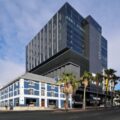
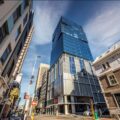
Cape Town has emerged as a leader in the green building space, with several landmark office rental developments setting the standard. Notable examples include:
- The Portside Building in the CBD, which was Cape Town’s first 5-Star Green Star rated commercial tower.
- The Allan Gray Headquarters at the V&A Waterfront, which holds a 6-Star Green Star rating and integrates features such as natural ventilation, energy-efficient lighting, and rainwater harvesting.
- Black River Park in Observatory, one of the first office precincts in South Africa to receive multiple Green Star certifications, with extensive solar PV installations reducing grid dependency.
These buildings not only offer sustainability but also feature modern architecture, exceptional amenities, and prime locations, making them attractive Cape Town office rental options for discerning tenants.
Green leases and strategic fit
Another reason to go green is the rise of green leases: agreements between landlords and tenants that align environmental and financial incentives.
These contracts include clauses to improve energy and water efficiency, waste management, and shared sustainability goals.
For tenants, this offers added transparency and control over utility costs. For owners, it can lead to long-term partnerships with tenants invested in the upkeep and performance of the building.
For buyers, particularly owner-occupiers, investing in a green building reduces future-proofing costs as regulations continue to evolve and energy prices rise.
A building that is already designed to be efficient becomes a long-term asset rather than a future liability.
Looking ahead: green buildings as a competitive advantage
With Eskom’s Just Energy Transition (JET) finally gaining momentum and municipalities like Cape Town incentivising solar energy adoption and off-grid solutions, commercial real estate players who embrace sustainable design and operations will have a head start.
As funding and policy incentives increasingly favour green projects, tenants and buyers who act early will benefit from first-mover advantages, the potential for better financing terms, and stronger market positioning.
 In today’s property market, sustainability isn’t just about saving the planet. Going green is about making smarter business decisions.
Whether you’re seeking to lease a dynamic office space or acquire a long-term asset in Cape Town’s most sought-after nodes, green-certified buildings offer tangible value and measurable returns.
To invest in the sustainable future of Cape Town and position your business for green success, contact our team of area specialists today.